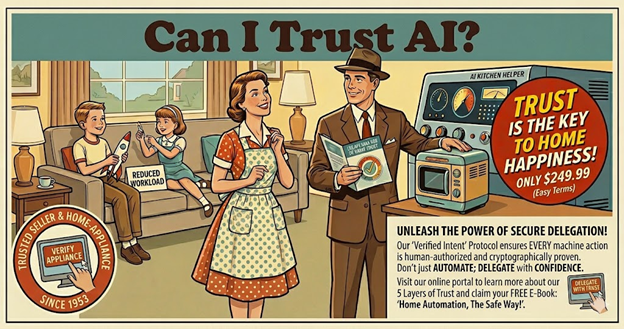
Trust Will Be The Currency Of Ai
It didn’t happen all at once. At first, AI just made things faster. Drafts came together quicker. Code appeared where there used to be blank screens. Work that once took days started taking hours, then minutes. The gains were obvious, tangible, and easy to celebrate. And somewhere along the way, a quieter shift took place. We started trusting things we didn’t fully understand.
And now something even more important is happening. AI isn’t just improving. It’s spreading. And the systems that spread fastest aren’t the ones that are smartest. They’re the ones people trust enough to use.
For most of modern history, trust came with context. You trusted content because you recognized the source. You trusted software because it came from a company with a brand, a support desk, and something to lose. You trusted systems because humans were visibly in the loop, writing the code, reviewing decisions, and taking responsibility when things went wrong. Those shortcuts weren’t perfect, but they worked well enough.
AI quietly dissolves those shortcuts.
Where Trust Used to Live
In the early digital era, trust was institutional. Software creation was gated. Distribution was centralized. Risk moved at the speed of organizations, not individuals. That model depended on scarcity. Scarcity of creators. Scarcity of code. Scarcity of authority.
That scarcity is gone. The ability to build software has exploded while governance and security lag behind. Creation scales first. Trust follows later. But trust doesn’t disappear. It moves. It shifts from institutions and brands to systems that can prove origin, identity, and intent. In the next phase of AI, trust will not be inferred. It will be verified.
The Trust Collapse
The first visible fracture showed up in content. Images began to look real when they weren’t. Voices sounded familiar when they weren’t. Deepfakes didn’t just introduce misinformation. They broke a basic human shortcut. Seeing stopped being believing. At the time, this felt like a media problem. Something labeling or moderation would eventually solve. In hindsight, it was a warning.
The same collapse is playing out in software. AI has collapsed the distance between idea and execution. Anyone can now build applications in hours. Code is proliferating faster than anyone can audit it, often without formal security review or long-term ownership. Software isn’t content. Software executes. AI-generated code introduces vulnerability patterns at a rate security researchers are only beginning to document. We didn’t just create more software. We created more places where trust can fail. And increasingly, that software doesn’t just execute code. It takes action on behalf of users. The boundary between software and operator is beginning to disappear.
Which brings us to the structural shift. We didn’t just outsource tasks. We outsourced agency. AI systems increasingly decide what actions to take, which tools to use, when to act, and how to interact with other systems. This isn’t automation. It’s delegation. And humans don’t yet have instincts for evaluating whether this delegation is safe. Adoption of AI continues to accelerate, but confidence has not kept pace. People are using AI more than they trust it. That gap is becoming structural. As autonomy increases, trust doesn’t naturally rise with it. It fractures.
The Core Conflict
Before getting into what fixing that requires, it’s worth naming the tension that makes it so hard.
AI agents are probabilistic by nature. They don’t execute rules. They generate outputs based on statistical patterns, which means the same input can produce different outputs across executions. That’s not a flaw. It’s the source of their power. But when probabilistic systems are delegated consequential actions, “usually correct” stops being acceptable. A financial workflow, a healthcare decision, an infrastructure change: these require guarantees that probabilistic systems cannot make on their own.
The conflict is architectural. The very quality that makes AI agents capable, their ability to reason flexibly across novel situations, is what makes them ungovernable by traditional means. Every layer of the trust infrastructure is an attempt to resolve that tension.
The Trust Stack
The infrastructure that makes trusted agentic operation possible resolves into five layers. Each one addresses a different point of failure. Together they form the architecture that separates AI deployments enterprises will bet on from ones they’ll quietly pull back from when something goes wrong.
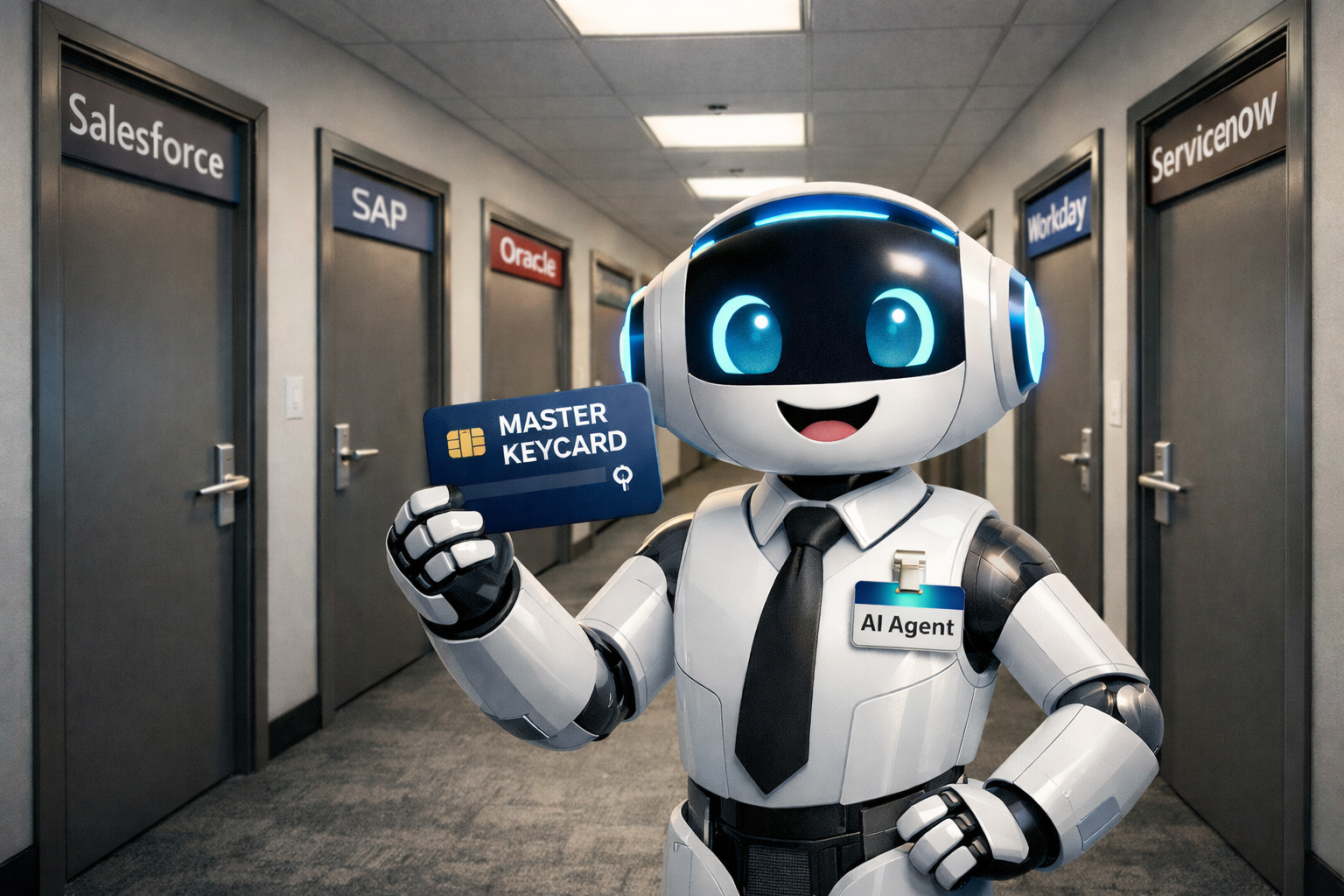
- Identity: Establishes who is acting and with what authority, built for ephemeral machine-to-machine systems rather than persistent human users. The identity question for agents isn’t just “who are you.” It’s “who authorized you, for what purpose, within what constraints, and can you prove all of that at the moment of action.” When an agent delegates to a sub-agent, and that sub-agent delegates further, identity has to travel through the chain cryptographically, not just be assumed.
- Provenance: Traces where instructions and data came from, making lineage a live property of every action rather than a post-hoc reconstruction. Without it, you can’t know whether training data was clean or poisoned, whether instructions came from a legitimate source or were injected mid-pipeline, or what actually happened after something goes wrong. In a world where AI trains on AI-generated content, provenance is the only thing standing between a trustworthy pipeline and one that has quietly drifted.
- Context: Grounds agents in verified, current operating reality at the moment of action. Prompt injection attacks exploit the gap between what an agent is told and what is actually true. Standards like the Model Context Protocol have made real progress on the connectivity side, giving agents a standardized way to interface with external tools and data sources. But MCP tells you how information arrives, not whether what arrived can be trusted. Verified context requires cryptographic grounding at the point of action, not just a clean interface, and that infrastructure is largely still being built.
- Governance: Defines what agents are permitted to do and enforces it structurally, not probabilistically. Governing AI with more AI only adds another probabilistic layer to a problem that requires a deterministic answer. The same input to a model-based policy engine can yield different compliance decisions across executions. That’s fine in a creative task. It’s not fine in a policy engine. Effective governance requires a layer underneath the model that behaves like a firewall: either the action is in bounds or it isn’t, and the answer is the same every time.
- Observability and Audit: Makes agent behavior legible in real time and reconstructable after the fact. Because agents are probabilistic, failure modes aren’t always errors. Sometimes an agent does exactly what it was told, and what it was told turned out to be wrong in ways nobody caught until the consequences compounded. You can’t catch that with exception logging. You have to observe the reasoning, not just the output. The companies building this infrastructure will occupy the same position in the AI era that Datadog and Splunk built in the cloud era: essential by the time everyone realizes they needed it.
No single layer is sufficient. Identity without governance tells you who is acting but not whether they should be. Governance without observability enforces policy at deployment but can’t detect drift in production. The stack only works when the layers work together, and most enterprises deploying AI today have fragments of it at best.
The Shape of the AI Age
Zoom out far enough and the AI era resolves around three fundamentals. Compute determines what intelligence can do. Energy determines whether intelligence can run at all. Cyber determines whether intelligence can be trusted.
But trust is no longer just a safety layer. It is also the mechanism through which AI spreads. The AI systems that get deployed at scale will not just be the most capable. They will be the ones that can be trusted by institutions, embedded in workflows, and verified at the point of use. Without the infrastructure to verify it, trust doesn’t scale. And without scale, capability doesn’t matter.
The DT Insight
AI isn’t just changing how much we can do. It’s changing the foundations of trust. We no longer trust content by default. We can no longer trust software by pedigree. We are beginning to trust machines with agency. And we are doing so without the infrastructure that trust at that scale requires.
The systems we’re trusting with agency are probabilistic by nature. They will make mistakes. They will do things their designers didn’t anticipate. That’s not a reason to stop deploying them. It’s a reason to build the infrastructure that bounds what they can do when they’re wrong. In the next phase of AI, trust will not be inferred. It will be verified.
Compute makes intelligence powerful. Energy makes it possible. Cyber makes it survivable. Trust makes it deployable.